Renting a hatchback for a self-drive trip sounds simple until you actually start comparing options and then the same question comes up every time: which car will actually feel comfortable for hours behind the wheel, handle city traffic without fuss, and not leave you disappointed on fuel costs?
If you’ve been circling back to the Hyundai i20 in your search, that’s not a coincidence. It’s one of the most consistently recommended hatchbacks for exactly this use case, and this Hyundai i20 review breaks down why from what’s actually inside the cabin to how it holds up on longer self-driven stretches.
First Impressions: Why the i20 Still Turns Heads
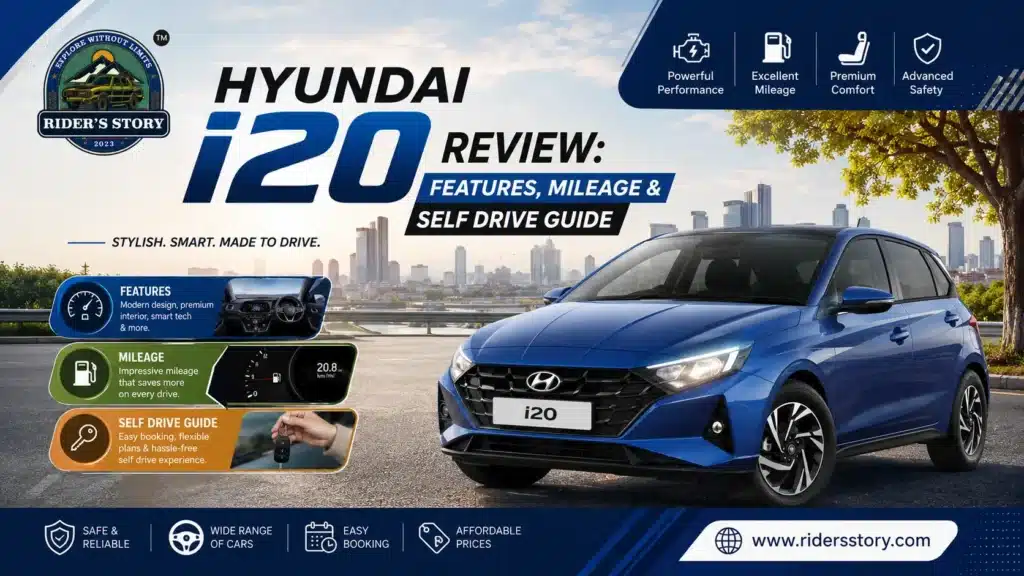
Even years after its current generation launched, the i20 hasn’t faded into the background the way a lot of hatchbacks do. The sharp parametric grille, LED daytime running lights, and Z-shaped tail lamps give it a road presence that’s noticeably more premium than most cars in its segment. Higher trims add full LED headlamps and diamond-cut alloy wheels, and the Knight Edition variant takes things further with blacked-out styling, red brake calipers, and a sporty rear spoiler.
For a self-drive renter, this matters more than people initially assume. A car that looks good isn’t just a vanity point it changes how confident you feel showing up to a client meeting, a family event, or simply parking it outside a hotel for the weekend.
Hyundai i20 Interior: Where It Genuinely Stands Out
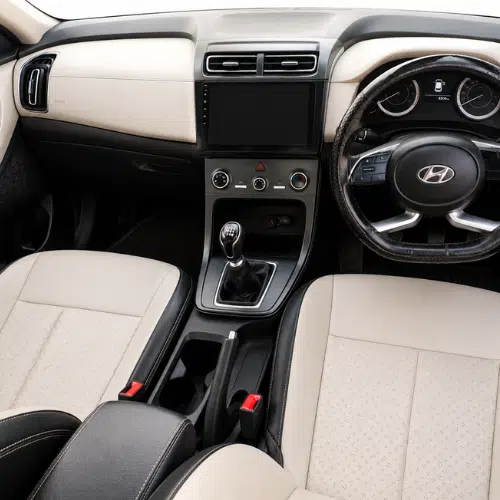
If there’s one area where the i20 consistently outperforms expectations, it’s the cabin. The Hyundai i20 interior is designed with a level of detail that feels closer to a segment above.
Space and Comfort
- A wide dashboard layout that doesn’t feel cramped, even for taller drivers
- Supportive seats that hold up well on longer drives
- Decent front-seat comfort, though rear headroom is a touch tighter for taller passengers worth knowing if you’re renting for a full family trip
Technology That Actually Gets Used
- A 10.25-inch touchscreen infotainment system with wireless Android Auto and Apple CarPlay
- A Bose 7-speaker premium audio system in higher trims a genuinely noticeable upgrade over standard hatchback audio
- Wireless phone charging, so you’re not hunting for a cable mid-drive
- BlueLink connected car technology for remote features and vehicle tracking
Details That Improve Everyday Driving
- A smart electric sunroof, operable via voice command in top variants
- Ambient interior lighting for a more premium feel after dark
- Cruise control, which makes a real difference on highway stretches during longer self-drive trips
For anyone renting a car for a multi-day trip, this combination of comfort and tech reduces fatigue in a way that’s easy to underestimate until you’ve actually spent six hours in the driver’s seat.
Engine, Performance, and What It's Actually Like to Drive
The i20 is powered by a 1.2-litre Kappa petrol engine (1197cc) in its standard form, known for being refined and smooth rather than aggressive. It handles city traffic comfortably and stays composed up to highway speeds, making it a dependable choice whether you’re navigating a crowded market road or cruising on an expressway.
For those wanting more punch, the turbo-petrol variant (available with the N Line and select higher trims) delivers noticeably stronger low-end performance useful if your self-drive plans include highway-heavy routes rather than purely city driving.
This is one of the most common questions renters ask, and the honest answer depends on how and where you’re driving.
Choose Hyundai i20 automatic if:
- You’ll be driving mostly in city traffic with frequent stop-and-go conditions
- You’re not confident with manual gear shifting, especially in unfamiliar cities
- You value a smoother, less fatiguing driving experience during long days behind the wheel
- You’re using the car for business travel where comfort matters more than involvement
Choose Hyundai i20 manual if:
- You prefer more direct control over the driving experience
- You’re comfortable with manual transmissions and enjoy a more engaging drive
- You’re planning a highway-heavy trip where manual gear control feels more intuitive to you
- You want a marginally simpler mechanical setup, which some renters find easier to manage on unfamiliar roads
Both versions perform reliably, so the decision usually comes down to personal comfort rather than one being objectively better than the other.
Hyundai i20 Mileage: What to Realistically Expect
Fuel efficiency is often the deciding factor for anyone renting a car for multi-day use, and the i20 performs respectably here without pretending to be a mileage champion.
- ARAI-claimed mileage ranges roughly between 16 to 20 kmpl depending on the variant and transmission
- Real-world city mileage typically falls between 12–14 kmpl, given stop-and-go traffic
- Highway mileage with AC running comfortably reaches 17–19 kmpl for most drivers
- The CVT/automatic variants tend to match or slightly trail manual variants in efficiency, but make up for it in comfort during city driving
For a self-drive renter covering multiple stops in a single day, this translates to fewer refueling stops compared to larger sedans or SUVs, without sacrificing cabin comfort.
Safety: A Genuine Strength of the i20
Safety used to be a weak point for hatchbacks in this segment, but the i20 has closed that gap meaningfully. Six airbags now come as standard across the range a significant upgrade that puts it ahead of several rivals still offering fewer as standard equipment. Additional safety elements include:
- Electronic Stability Control (ESC)
- Hill-start assist
- Rear parking sensors and camera (varies by trim)
- Dashcam functionality in top trims
For anyone renting a self-drive car in an unfamiliar city, this safety cushion adds a real layer of confidence, especially when driving conditions or traffic patterns are new to you.
Why the i20 Works So Well for Self-Drive Rentals Specifically
A car review written for buyers focuses on ownership costs and resale value. A review written for renters needs a different lens and on that front, the i20 checks boxes that matter specifically for short-term self-drive use:
- Easy to drive in unfamiliar cities thanks to good visibility and a manageable footprint
- Comfortable enough for full-day use without the fatigue some smaller hatchbacks cause on longer stretches
- Feature-rich cabin that makes even a rented car feel premium during your trip
- Reasonable fuel costs for multi-stop itineraries
- Available in both automatic and manual, so renters can choose based on comfort level with local traffic conditions
This is exactly why providers offering self-drive rentals often include the i20 among their most requested vehicles it strikes a rare balance between comfort, practicality, and everyday usability. Fleets managed by providers like ridersstory frequently keep the i20 as a go-to option, precisely because it satisfies both comfort-focused renters and those simply looking for a reliable, feature-rich hatchback for a short trip.
Practical Tips If You're Renting an i20 for Self-Drive
If you’re booking through a self-drive provider such as ridersstory, a quick chat with their support team about variant availability can save you a mismatch between what you expect and what’s actually parked at pickup.
- Check tyre pressure at pickup it directly affects both ride comfort and fuel efficiency
- Confirm which variant you’re getting feature differences between trims (sunroof, cruise control, Bose audio) are noticeable
- Ask whether it’s the automatic or manual version before booking, especially if you’re not confident switching between the two
- Note the fuel gauge reading at pickup to track mileage accurately during your rental period
- Test the infotainment pairing early so you’re not fumbling with Bluetooth or CarPlay setup mid-drive
Frequently Asked Questions
1. Is the Hyundai i20 a good choice for a full-day self-drive rental?
Yes. Its comfortable seating, refined engine, and manageable size make it well-suited for full-day driving, including multi-stop city trips.
2. What is the real-world mileage of the Hyundai i20?
Most drivers report 12–14 kmpl in city traffic and 17–19 kmpl on highways, with ARAI-claimed figures ranging up to 20 kmpl depending on variant.
3. Should I rent the Hyundai i20 automatic or manual version?
Automatic suits city-heavy driving and reduces fatigue in traffic, while manual suits drivers who prefer more direct control, especially on highway stretches.
4. Does the Hyundai i20 have enough space for a family trip?
Front-seat space and comfort are excellent. Rear seating is comfortable for two adults, though headroom can feel slightly tight for taller passengers on longer trips.
5. Is the Hyundai i20 safe for driving in an unfamiliar city?
Yes. Six airbags are standard across the range, along with ESC and hill-start assist, giving renters solid confidence in unfamiliar traffic conditions.